
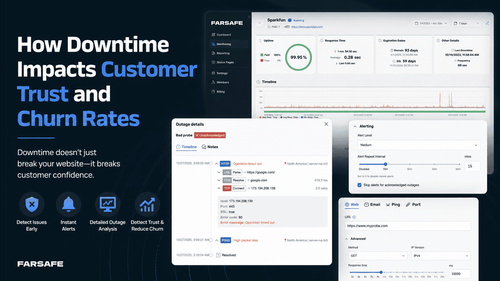
A website outage rarely lasts forever, but the damage it creates often does.
In 2026, customers expect websites, SaaS platforms, and online services to work instantly and consistently. Whether someone is completing a payment, accessing a dashboard before a client meeting, or logging into an account during work hours, even a short disruption can create frustration. More importantly, it can quietly weaken trust.
Many businesses still think of downtime as a technical issue handled by developers or IT teams. Customers see it differently. To them, reliability reflects professionalism, security, and credibility. If a website repeatedly fails to load or an application becomes unavailable at critical moments, users begin questioning the business behind it.
That is why downtime impacts far more than immediate revenue. It affects customer confidence, brand reputation, retention, and long-term growth. In highly competitive industries where alternatives are only one click away, customers rarely wait patiently for businesses to recover. They simply move on.
Why Customers Expect Constant Availability Today
Digital behavior has changed dramatically over the last few years. Customers now rely on websites and online platforms throughout the day for shopping, communication, banking, healthcare, and business operations. As a result, expectations around reliability have become much higher.
Streaming services work instantly. Food delivery apps update in real time. SaaS platforms sync data continuously across devices. Customers have become accustomed to fast and uninterrupted experiences, and they expect the same level of reliability from every business they interact with online.
This shift has created a new reality for digital brands. Downtime is no longer viewed as a temporary inconvenience. It is often interpreted as poor service quality.
For SaaS companies, even a short outage during working hours can disrupt entire teams. For ecommerce brands, a failed checkout page during peak traffic can immediately cost sales and customer confidence. According to research published by HubSpot, modern consumers are increasingly impatient with poor digital experiences, especially when they interrupt purchases or account access.
Businesses that actively track uptime and reliability metrics are generally faster at identifying issues before customers notice them. Understanding how availability is measured can also help companies improve operational reliability over time. Learning how to properly calculate uptime percentages is an important step for businesses that want to reduce customer-facing disruptions.
How Downtime Damages Customer Trust
Customer trust is built through consistency. Every successful interaction strengthens confidence in a business. Downtime breaks that consistency immediately.
Unlike minor design issues or slow-loading pages, outages completely prevent customers from achieving what they came to do. They cannot complete purchases, access services, retrieve information, or communicate with support teams. When this happens repeatedly, frustration quickly turns into doubt.
Downtime Creates Uncertainty
One of the biggest problems with downtime is uncertainty. Customers instantly begin asking questions they never had before.
- Is the website secure?
- Was my payment processed?
- Is my account information safe?
- Can I rely on this service in the future?
For first-time visitors, these doubts are often enough to end the relationship immediately. Existing customers may become more cautious, especially after repeated outages.
Many outages are caused by avoidable operational problems such as server overload, expired domains, DNS failures, SSL issues, or application errors. Businesses that understand the common reasons why websites go down are usually better prepared to prevent recurring disruptions before they impact customers.
First Impressions Collapse Quickly Online
Online trust is fragile because customers always have alternatives available. A user who encounters downtime during their first interaction with a business may never return.
Imagine a customer clicking on an ad for a SaaS platform during a free trial campaign. If the signup page fails to load or the dashboard becomes unavailable, that potential customer may immediately switch to a competitor.
The same thing happens in ecommerce. A checkout failure during a purchase creates frustration that customers often remember long after the issue is resolved. According to reliability insights shared by Cloudflare, even short disruptions can negatively affect customer confidence and digital experience perception.
Most Customers Leave Quietly
One of the most dangerous consequences of downtime is silent churn.
Most frustrated users do not contact support teams to explain why they left. They simply stop renewing subscriptions, abandon purchases, or begin using competitors that feel more dependable.
This pattern is especially common in SaaS businesses. Customers who experience repeated outages gradually lose confidence over time. Eventually, reliability concerns become strong enough to influence renewal decisions.
Because users rarely announce their frustration directly, many businesses underestimate how strongly downtime affects retention.
The Direct Connection Between Downtime and Churn Rates
Customer churn refers to the percentage of users who stop using a service over time. While businesses often focus on pricing, competition, or marketing when analyzing churn, reliability plays a much larger role than many companies realize.
Customers stay loyal to services they can depend on. Once reliability becomes inconsistent, trust weakens quickly.
For SaaS platforms, downtime directly interrupts productivity. Teams relying on communication tools, project management systems, analytics dashboards, or cloud applications expect those services to remain accessible at all times. A single outage during an important client presentation or reporting deadline can create lasting frustration.
Ecommerce businesses face similar risks. If customers experience failed checkouts, broken product pages, or payment processing issues, many will abandon purchases completely. Some may never return.
Research from AWS Reliability and Resiliency Resources consistently highlights the importance of proactive monitoring and infrastructure visibility in reducing service disruptions before they affect users.
This is why proactive monitoring matters so much. Businesses using advanced website monitoring tools can often identify issues before they escalate into larger customer experience problems.
Industries Most Affected by Downtime
While downtime affects nearly every online business, some industries experience much greater customer trust risks than others.
SaaS Platforms
Reliability is essential for SaaS businesses because customers depend on these tools daily. Even short interruptions can disrupt workflows, meetings, reporting, and communication.
In competitive SaaS markets, uptime becomes part of the product experience itself. Customers expect platforms to remain stable regardless of traffic spikes or usage demand.
Ecommerce Businesses
For ecommerce brands, downtime directly impacts both revenue and customer loyalty. If a website crashes during checkout, customers often abandon their carts immediately.
This risk becomes even more serious during high-traffic periods such as holiday sales, flash promotions, or product launches. Businesses that fail during peak demand often lose more than immediate revenue. They lose customer confidence.
Companies that proactively work to reduce website downtime in 2026 are usually better positioned to maintain both revenue and customer retention during critical periods.
Financial and Healthcare Services
Trust-sensitive industries face even higher expectations around reliability. Customers using banking, insurance, or healthcare platforms expect secure and uninterrupted access at all times.
Frequent outages in these industries can quickly damage credibility because users often associate system stability with professionalism and data security.
The Long-Term Reputation Damage Businesses Ignore
The immediate financial cost of downtime is easy to measure. Reputation damage is much harder to calculate, but often more harmful in the long run.
Customers frequently share negative experiences online through reviews, forums, and social media posts. A website outage during a major launch or campaign can generate public criticism that continues long after the technical issue is resolved.
Repeated reliability problems also influence how customers recommend businesses internally. Teams stop suggesting unreliable tools to coworkers. Agencies avoid referring unstable platforms to clients. Customers begin associating the brand with frustration instead of dependability.
Over time, this weakens customer loyalty and reduces long-term brand authority.
How Proactive Monitoring Helps Reduce Customer Churn
Proactive monitoring allows businesses to identify issues before customers experience major disruptions. Instead of reacting after users complain, companies can respond early and reduce the overall impact on customer experience.
Modern monitoring systems help businesses track:
- uptime
- SSL certificate health
- response times
- domain expiration
- server availability
- performance issues
For example, forgetting to monitor domain expiration can unexpectedly take an entire website offline, creating avoidable customer trust and revenue problems.
Businesses that regularly check website uptime for free are generally faster at identifying downtime before it escalates into larger operational issues.
Reliable monitoring platforms also improve incident response speed. The faster businesses identify and resolve outages, the lower the chance customers will abandon the platform entirely.
Solutions like Farsafe help businesses maintain visibility into uptime, SSL health, and website performance so they can reduce customer-facing disruptions before they become long-term retention problems.
FAQ
How does website downtime affect customer trust?
Website downtime affects customer trust by creating frustration, uncertainty, and reliability concerns. When users cannot access a website or complete important actions like payments or logins, they may begin questioning the professionalism and stability of the business.
Can downtime increase customer churn rates?
Yes, repeated downtime can significantly increase customer churn rates. Customers who experience outages often look for more reliable alternatives, especially in competitive industries like SaaS, ecommerce, finance, and online services.
Why do customers leave after website outages?
Most customers leave after outages because they lose confidence in the reliability of the service. Failed checkouts, login issues, or inaccessible platforms create negative experiences that push users toward competitors offering more stable performance.
How can businesses reduce downtime-related customer loss?
Businesses can reduce downtime-related customer loss by using proactive monitoring tools, improving server reliability, monitoring SSL certificates and domain expiration, and responding quickly to outages before customers are heavily affected.
What tools help monitor website downtime?
Website monitoring tools help businesses track uptime, response times, SSL health, server availability, and outages in instantly. Platforms like Farsafe help businesses identify issues early and reduce the impact of downtime on customer experience and retention.
Final Thoughts
Downtime is no longer just a technical inconvenience. It has become a direct customer experience and business growth issue.
Modern users expect digital services to remain fast, stable, and consistently available. When outages happen repeatedly, trust begins disappearing quietly. Customers rarely announce they are leaving. They simply move toward businesses that feel more reliable.
In highly competitive markets, reliability often becomes one of the strongest trust signals a company can offer. Businesses that invest in proactive monitoring, faster incident response, and long-term uptime management are not only protecting infrastructure. They are protecting customer loyalty, reputation, and future revenue.