
Can website downtime be prevented completely?Expired domains, overlooked renewals, misconfigured settings, and missed warning signs can all lead to unnecessary downtime. Creating simple processes to review these potential vulnerabilities can prevent problems before they impact customers.Receiving alerts is only valuable if your team knows how to respond.The reality is that proactive monitoring is often far more cost-effective than dealing with the aftermath of an unexpected disruption. The ability to detect unusual behaviour, receive timely alerts, and investigate issues before they escalate can significantly reduce both the frequency and impact of downtime events.The impact of downtime extends beyond immediate financial losses.A few minutes of downtime may not seem like a major issue until you calculate what those minutes actually cost. Lost sales, frustrated customers, overwhelmed support teams, and damage to your reputation can add up faster than many businesses realise. In a world where customers expect websites and digital services to be available around the clock, even a brief disruption can have consequences that extend far beyond temporary inconvenience.
The true cost of downtime is often underestimated. While large-scale outages make headlines, smaller disruptions happen every day and can quietly affect businesses of all sizes. Whether it is an e-commerce store unable to process orders, a SaaS platform losing user confidence, or an internal application preventing employees from doing their jobs, downtime can quickly become an expensive problem.
The good news is that many outages can be detected early or prevented altogether. With proactive monitoring and instant alerts, businesses can respond faster, minimise disruption, and protect the experiences their customers rely on.
In this article, we'll explore the hidden costs of downtime, the common causes behind website and service interruptions, and how Farsafe's Advanced Uptime Monitoring helps businesses stay one step ahead of unexpected outages.
The True Cost of Downtime for Modern Businesses
For many organisations, downtime is viewed as an occasional technical issue. In reality, it is a business issue with financial, operational, and reputational consequences.
According to ITIC's 2024 Hourly Cost of Downtime Survey, more than 90% of mid-sized and large organisations estimate that a single hour of downtime costs more than $300,000, while 41% report losses ranging from $1 million to over $5 million per hour. These figures highlight how quickly the impact of service disruptions can escalate, particularly for businesses that rely heavily on digital operations.
Lost Revenue Adds Up Quickly
When customers cannot access your website, place an order, complete a payment, or use your service, revenue generation often stops immediately.
For an online retailer, downtime during a peak shopping period can mean abandoned carts and missed sales opportunities. For SaaS companies, service interruptions can affect customer renewals and increase churn. Even businesses that do not sell directly through their websites can lose valuable leads when prospective customers encounter unavailable services.
The financial impact is not always obvious in the moment. However, every minute of disruption represents missed opportunities that are difficult to recover later.
Productivity Takes a Hit
Downtime affects employees just as much as customers.
Internal teams may be unable to access critical applications, communicate effectively, or complete day-to-day tasks. IT departments often shift their focus from strategic initiatives to emergency troubleshooting. Customer support teams experience higher call volumes and increased pressure from frustrated users seeking answers.
What begins as a technical outage can quickly ripple across the organisation, creating delays, inefficiencies, and unexpected operational costs.
Customer Trust Is Hard to Rebuild
Customers have more choices than ever before. They expect websites, applications, and online services to work whenever they need them.
When outages become frequent, confidence begins to erode. A visitor who encounters an unavailable website may simply try a competitor instead. Existing customers may question whether your business can reliably meet their needs.
Trust takes time to build but can disappear surprisingly quickly when reliability becomes a concern.
Reputation and Brand Perception Can Suffer
The impact of downtime extends beyond immediate financial losses.
Repeated disruptions can shape how customers perceive your business. Negative experiences are often shared publicly through reviews, social media, and professional networks. In competitive markets, a reputation for unreliability can influence purchasing decisions long after the technical issue has been resolved.
Research from Uptime Institute has consistently shown that significant outages continue to create substantial business risks, with many organisations reporting serious financial and reputational consequences following major incidents. Reliable service availability is no longer just an IT objective. It has become a critical component of brand trust and customer experience.
The reality is simple. Downtime costs more than most businesses realise. The longer issues go unnoticed, the more expensive they become. Understanding these costs is the first step towards building a more resilient and proactive approach to monitoring and incident response.
Understanding Uptime and Availability
Downtime is only one side of the equation. The other is uptime.
Uptime measures the amount of time your website or service remains available and accessible to users. It is typically expressed as a percentage over a specific period. For example, 99.9% uptime sounds impressive, but it still allows for nearly nine hours of downtime each year.
If you're unfamiliar with how these percentages work and why they matter to your business, our guide to understanding what uptime means and how it affects service reliability provides a more detailed explanation.
These percentages may seem like small differences on paper, but they can have a significant impact depending on the nature of your business. For an e-commerce website operating during peak sales periods or a SaaS platform serving customers across multiple time zones, even short interruptions can quickly become costly.
Why Availability Metrics Matter
Many organisations set uptime targets through internal service objectives or customer agreements. These targets help define expectations and provide a benchmark for measuring performance.
However, achieving strong availability requires more than simply hoping systems stay online. Businesses need visibility into what is happening across their websites and services so they can identify problems early and respond quickly.
Understanding what downtime actually looks like and how uptime is measured provides valuable context for the next question many businesses face: What causes these disruptions in the first place, and how can they be prevented before they affect customers?
Common Causes of Website Downtime
Website outages rarely happen without a reason. While some disruptions are unavoidable, many can be traced back to a handful of common issues. Understanding these causes is the first step towards preventing them and reducing their impact on your business.
Server and Hosting Failures
Your website depends on the infrastructure supporting it. If a hosting provider experiences hardware failures, data centre issues, or resource constraints, your website can become partially or completely unavailable.
Even businesses using reputable hosting providers are not immune to unexpected service interruptions. This is why continuous monitoring is so important. The sooner an issue is detected, the faster your team can respond and minimise disruption.
DNS and Network Issues
A website may be running perfectly behind the scenes, yet visitors still cannot access it because of problems with DNS records, routing failures, or network outages.
These issues can be particularly frustrating because they are not always immediately visible from within your own environment. In many cases, businesses only become aware of the problem after customers begin reporting that they cannot access the website.
If you've ever found yourself wondering why visitors can no longer reach your site without any obvious explanation, our guide to identifying the most common reasons a website suddenly becomes unavailable explores the warning signs and troubleshooting steps in more detail.
Traffic Spikes and Resource Limitations
Success can sometimes create its own challenges.
A marketing campaign, seasonal promotion, product launch, or viral social media post can generate more traffic than your infrastructure is prepared to handle. Without adequate resources or monitoring in place, websites may slow down significantly or stop responding altogether.
While increased demand is a positive sign of growth, businesses need visibility into performance trends to ensure their systems can scale effectively when traffic surges occur.
Human Error and Software Misconfigurations
Not every outage is caused by technology failing on its own.
Configuration mistakes, failed deployments, accidental changes to settings, and software compatibility issues can all interrupt service availability. Even experienced teams occasionally make errors, especially when managing increasingly complex environments.
Monitoring solutions play an important role here by detecting problems quickly after changes are introduced, allowing teams to investigate and resolve issues before they escalate.
Expired Domains and Overlooked Renewals
Some outages occur because of something surprisingly simple.
A forgotten domain renewal can take an otherwise healthy website offline, disrupting customer access and potentially damaging your brand's credibility. Because domain renewals often happen only once a year, they can easily be overlooked during busy periods.
Taking a proactive approach to keeping track of domain expiration dates before they become a problem helps businesses avoid one of the most preventable causes of downtime.
The reality is that many website outages are not completely unpredictable. By understanding the most common causes and implementing the right monitoring processes, businesses can identify risks earlier and reduce the likelihood of unexpected disruptions affecting their customers.
Why Every Minute of Downtime Matters
When businesses think about downtime, they often focus on major outages that last for hours. In reality, some of the most damaging disruptions are much smaller and happen more frequently. A few minutes here and there may not seem significant, but those interruptions accumulate over time.
Understanding Availability Targets
Many organisations measure reliability using uptime percentages. While the difference between 99%, 99.9%, and 99.99% availability may appear minor, the amount of downtime each allows can vary dramatically over the course of a year.
At 99% uptime, a business could experience more than three days of downtime annually. Increase that figure to 99.9%, and the allowable downtime drops to less than nine hours per year. At 99.99%, the margin for disruption becomes even smaller.
These numbers illustrate an important point: what looks like a tiny percentage difference can translate into hours of lost availability, missed opportunities, and frustrated customers.
If you're evaluating service level expectations or reviewing the performance of your own systems, our guide to calculating uptime and understanding what availability percentages actually mean for your business can help you interpret these figures more effectively.
The Financial Impact of Small Outages
Not every outage makes headlines, but smaller disruptions can quietly drain resources.
A five-minute outage during business hours might interrupt customer transactions, delay internal workflows, generate support tickets, and divert IT teams from strategic initiatives. When these incidents occur repeatedly throughout the year, their cumulative impact can become substantial.
The costs are not always immediately visible on a balance sheet. Lost customer confidence, delayed projects, reduced productivity, and missed sales opportunities often reveal themselves gradually.
For businesses operating in competitive markets, reliability is not simply a technical metric. It directly influences customer experience and revenue performance.
Downtime Is Often More Expensive Than Prevention
Many organisations invest heavily in recovering from outages but comparatively little in preventing them.
The reality is that proactive monitoring is often far more cost-effective than dealing with the aftermath of an unexpected disruption. The ability to detect unusual behaviour, receive timely alerts, and investigate issues before they escalate can significantly reduce both the frequency and impact of downtime events.
Prevention also gives businesses greater confidence. Instead of waiting for customers to report that something is wrong, teams gain the visibility needed to act quickly and decisively.
Ultimately, every minute of downtime matters because customers rarely distinguish between a brief interruption and a major failure. They simply remember whether your business was available when they needed it most.
Recognising the true impact of even short outages changes the conversation. Reliability stops being viewed as an operational expense and becomes a business priority, setting the stage for a more proactive approach to monitoring and incident response.
Why Basic Monitoring Is No Longer Enough
Not long ago, many businesses relied on a simple approach to detecting problems: wait for someone to complain.
A customer would call to report that the website was unavailable. An employee would notice that a critical application had stopped responding. The IT team would investigate, identify the issue, and work to restore service as quickly as possible.
The problem with this approach is obvious. By the time someone reports an issue, the damage has already begun.
Customers Shouldn't Be Your Monitoring System
Every minute between an outage occurring and your team becoming aware of it increases the potential impact on the business.
Customers attempting to place orders may abandon their purchases. Prospective clients researching your services could leave your website and turn to competitors. Employees relying on internal systems may find themselves unable to complete essential tasks.
When customers become the first line of detection, businesses are forced into a reactive cycle where they are always responding after the fact rather than preventing problems from escalating.
Manual Checks Create Blind Spots
Some organisations still depend on occasional manual checks to confirm that their websites are functioning correctly.
The challenge is that websites and digital services operate continuously, even when your team is offline. A homepage that appears accessible during a morning check could experience issues later that afternoon, overnight, or during weekends without anyone noticing.
As businesses grow, this approach becomes increasingly difficult to manage. Monitoring critical services manually simply cannot provide the level of visibility required in an always-on environment.
Modern Digital Operations Demand Visibility
Today's customers expect immediate access to the services they depend on. They do not distinguish between planned business hours and evenings, weekends, or holidays.
For organisations operating across different regions and time zones, maintaining visibility into service availability is no longer optional. Teams need to know when issues occur, understand their potential impact, and respond before a minor disruption turns into a major incident.
Contniews monitoring provides that awareness by continuously checking the health and availability of critical systems rather than relying on assumptions.
Faster Detection Leads to Faster Resolution
The sooner a problem is identified, the sooner recovery efforts can begin.
Early detection allows teams to investigate the root cause before support requests pile up and customers become frustrated. It also provides valuable context that can help prevent similar incidents in the future.
While no business can eliminate every potential outage, reducing the time between detection and response can significantly minimise the operational and financial impact of disruptions.
A Proactive Approach Has Become a Competitive Advantage
Reliability is increasingly shaping how customers evaluate businesses.
Organisations that can identify issues quickly, communicate effectively, and maintain consistent service availability are better positioned to earn customer trust and strengthen their reputation.
This shift has changed the role of monitoring. It is no longer just an IT function focused on technical metrics. It has become a business capability that protects revenue, supports customer experience, and helps organisations operate with greater confidence.
The question is no longer whether businesses should monitor their digital services. The real question is whether their current approach gives them enough visibility to act before downtime begins affecting the people who rely on them.
This is where advanced uptime monitoring makes the difference.
How Farsafe's Advanced Uptime Monitoring Protects Your Business
Recognising the cost of downtime is only part of the equation. Businesses also need a practical way to detect issues early, respond quickly, and minimise disruption when problems occur.
This is where Farsafe's Advanced Uptime Monitoring comes in.
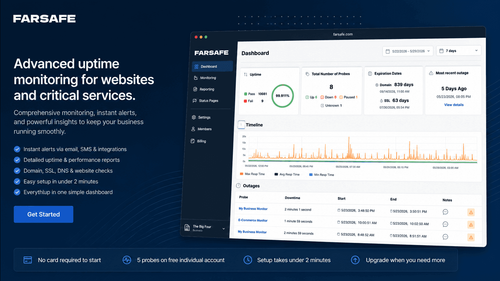
Rather than waiting for customers to report that something is wrong, Farsafe gives businesses continuous visibility into the availability of their websites and critical services. By identifying issues as they happen, teams can take action sooner and reduce the impact of unexpected outages.
Continuous Monitoring That Never Stops
Digital services do not operate on a nine-to-five schedule, and neither should your monitoring.
Farsafe continuously checks the availability of your websites and services, helping ensure that potential issues are detected regardless of when they occur. Whether it's during peak business hours, overnight, or over the weekend, your team gains confidence that service health is being monitored around the clock.
This constant visibility helps eliminate the uncertainty that comes with relying on manual checks or customer complaints to identify problems.
Instant Alerts When Every Minute Counts
The speed at which your team becomes aware of an issue can significantly influence its impact.
When a service disruption occurs, timely notifications enable teams to investigate and respond before a minor incident develops into a major outage. Faster awareness means faster decision-making, reduced downtime, and fewer customers affected by the disruption.
In environments where even a few minutes of unplanned downtime can be costly, rapid alerts become an essential part of maintaining business continuity.
Visibility Across Your Critical Services
Many businesses focus exclusively on whether their homepage is online, but service reliability extends far beyond a single webpage.
Modern organisations depend on multiple interconnected systems, including websites, customer portals, APIs, and supporting infrastructure. Monitoring these critical touchpoints provides a more complete understanding of operational health and helps identify issues that might otherwise go unnoticed.
This broader perspective allows businesses to move from reactive troubleshooting to proactive management.
Historical Insights That Support Better Decisions
Monitoring is not only about detecting current issues. It is also about learning from them.
Historical reporting helps teams identify recurring patterns, measure performance trends, and evaluate whether reliability initiatives are delivering meaningful improvements over time.
These insights can support infrastructure planning, resource allocation, and conversations around service level objectives, helping organisations make more informed decisions about future investments.
Built for Businesses That Cannot Afford Downtime
Every business experiences downtime differently.
For an e-commerce retailer, it may mean abandoned carts and lost sales. For a SaaS provider, it could affect customer satisfaction and retention. For service-based businesses, even temporary disruptions can result in missed opportunities and reputational damage.
Farsafe's approach is designed to help organisations reduce uncertainty by providing the visibility needed to detect issues quickly and respond with confidence.
If you're ready to take a more proactive approach to service reliability, explore how Farsafe's Advanced Uptime Monitoring solution can help you stay ahead of unexpected disruptions and protect the experiences your customers depend on every day.
By shifting from reactive response to continuous awareness, businesses place themselves in a stronger position to minimise downtime, protect revenue, and build the trust that comes from consistently delivering reliable digital experiences.
Practical Steps to Reduce Website Downtime
While no organisation can eliminate every possible outage, many disruptions can be prevented or their impact significantly reduced with the right processes and tools in place. Building a more resilient digital presence starts with adopting a proactive mindset rather than reacting only after problems occur.
Monitor Your Most Critical Services Continuously
Not all systems carry the same level of business impact. Start by identifying the services your customers and employees rely on most, whether that's your website, checkout process, customer portal, APIs, or internal applications.
Continuous monitoring provides the visibility needed to detect issues quickly and understand when performance or availability begins to decline. The earlier a problem is identified, the more options teams have to resolve it before it affects users.
Establish Clear Alerting Processes
Receiving alerts is only valuable if your team knows how to respond.
Define who should be notified when incidents occur, establish escalation procedures, and ensure responsibilities are clearly understood. Having a documented response process reduces confusion during high-pressure situations and helps minimise delays in resolving issues.
Prepared teams are often able to restore services faster because they spend less time deciding what to do next.
Review Performance Trends Regularly
Monitoring should not be treated as a set-and-forget activity.
Historical performance data can reveal recurring issues, seasonal patterns, and areas where infrastructure improvements may be needed. Regular reviews help businesses move beyond simply fixing incidents and towards addressing the root causes behind them.
Over time, these insights contribute to stronger reliability and more informed operational decisions.
Don't Overlook Preventable Risks
Some of the most disruptive outages stem from avoidable oversights.
Expired domains, overlooked renewals, misconfigured settings, and missed warning signs can all lead to unnecessary downtime. Creating simple processes to review these potential vulnerabilities can prevent problems before they impact customers.
Businesses looking for additional strategies to strengthen service reliability may find value in our guide to reducing website downtime through practical, proactive measures that support long-term availability.
Test and Improve Your Response Plans
Even the best-prepared organisations encounter unexpected issues.
What often separates resilient businesses from the rest is how effectively they respond. Periodically reviewing incident response procedures, evaluating lessons learned from previous disruptions, and identifying opportunities for improvement can strengthen your ability to recover quickly.
Preparedness is not about expecting failure. It's about ensuring your business can adapt and respond with confidence when challenges arise.
Make Reliability Part of Your Business Strategy
Reducing downtime is not solely the responsibility of IT teams.
Customer experience, revenue generation, operational efficiency, and brand reputation are all influenced by service availability. When reliability becomes a shared business priority, organisations are better equipped to make decisions that support long-term growth and customer trust.
Downtime may never be completely avoidable, but its frequency and impact can often be reduced through better visibility, proactive planning, and a commitment to continuous improvement.
The businesses that perform best over time are rarely those that never encounter problems. They are the ones that identify issues early, respond effectively, and learn from every incident to build stronger, more reliable digital experiences.
Frequently Asked Questions About Downtime and Farsafe's Uptime Monitoring
What is the true cost of website downtime?
The cost of website downtime extends beyond lost sales. Businesses may also experience reduced productivity, increased support workloads, reputational damage, and a decline in customer trust. Even short disruptions can have a significant cumulative impact over time, particularly for organisations that rely heavily on digital channels.
How much downtime is considered acceptable?
The answer depends on your business model and customer expectations. While many organisations aim for 99.9% uptime or higher, the acceptable level of downtime varies based on the criticality of the service. For customer-facing platforms, even a few minutes of unexpected downtime can affect revenue and user satisfaction.
Can website downtime be prevented completely?
No monitoring solution can eliminate every possible outage. However, proactive monitoring, timely alerts, and well-defined response processes can help businesses detect issues earlier, minimise disruption, and reduce the likelihood of preventable incidents.
What makes Farsafe's Advanced Uptime Monitoring different from basic monitoring?
Basic monitoring often relies on manual checks or delayed awareness of problems. Farsafe's Advanced Uptime Monitoring is designed to provide continuous visibility into your critical services, helping teams identify issues quickly and respond before they significantly affect customers and operations.
Who should use Farsafe's Advanced Uptime Monitoring?
Farsafe's monitoring solutions are suitable for businesses of all sizes that depend on digital availability. This includes e-commerce stores, SaaS companies, agencies, service providers, IT teams, and organisations that want greater confidence in the reliability of their websites and online services.
How can I get started with Farsafe's Advanced Uptime Monitoring?
Businesses looking to take a proactive approach to reliability can explore Farsafe's Advanced Uptime Monitoring to learn more about its capabilities and determine whether it aligns with their monitoring requirements.
Downtime Prevention Is a Business Investment, Not an Expense
Downtime is often measured in minutes, but its impact can last much longer. Lost revenue, disrupted operations, frustrated customers, and damage to your reputation all carry costs that extend well beyond the moment a service becomes unavailable.
The good news is that many outages are not entirely unpredictable. By understanding the common causes of downtime, monitoring critical services continuously, and responding quickly when issues arise, businesses can significantly reduce both the frequency and impact of disruptions.
As organisations become increasingly dependent on digital experiences, reliability is no longer just an IT objective. It has become a business priority that influences customer trust, operational efficiency, and long-term growth.
Investing in proactive monitoring is ultimately an investment in resilience. It enables teams to identify problems earlier, minimise disruption, and maintain the level of service that customers have come to expect.
Businesses that wait until customers report an outage are often already paying the price. Those that prioritise visibility and preparedness place themselves in a much stronger position to protect revenue, preserve their reputation, and deliver consistent experiences when it matters most.
If you're ready to move beyond reactive troubleshooting, explore how Farsafe's Advanced Uptime Monitoring helps businesses detect issues sooner, respond faster, and stay one step ahead of unexpected downtime.
Because in today's always-connected environment, reliability isn't simply about keeping systems online. It's about protecting the trust your customers place in your business every single day.